Achieve a 90% transaction auto-match rate with AI Agents
Just complete the form below
HighRadius stands out as a challenger by delivering practical, results-driven AI for Record-to-Report (R2R) processes. With over 200 LiveCube agents automating 60 %+ of close tasks and real-time anomaly detection powered by 15+ machine learning models, the platform drives continuous close with guaranteed business outcomes—moving beyond AI hype. HighRadius aims to achieve 90% automation by 2027 as it evolves toward full autonomy
Learn how HighRadius is helping global enterprises automate, accelerate, and lead the future of the financial close.
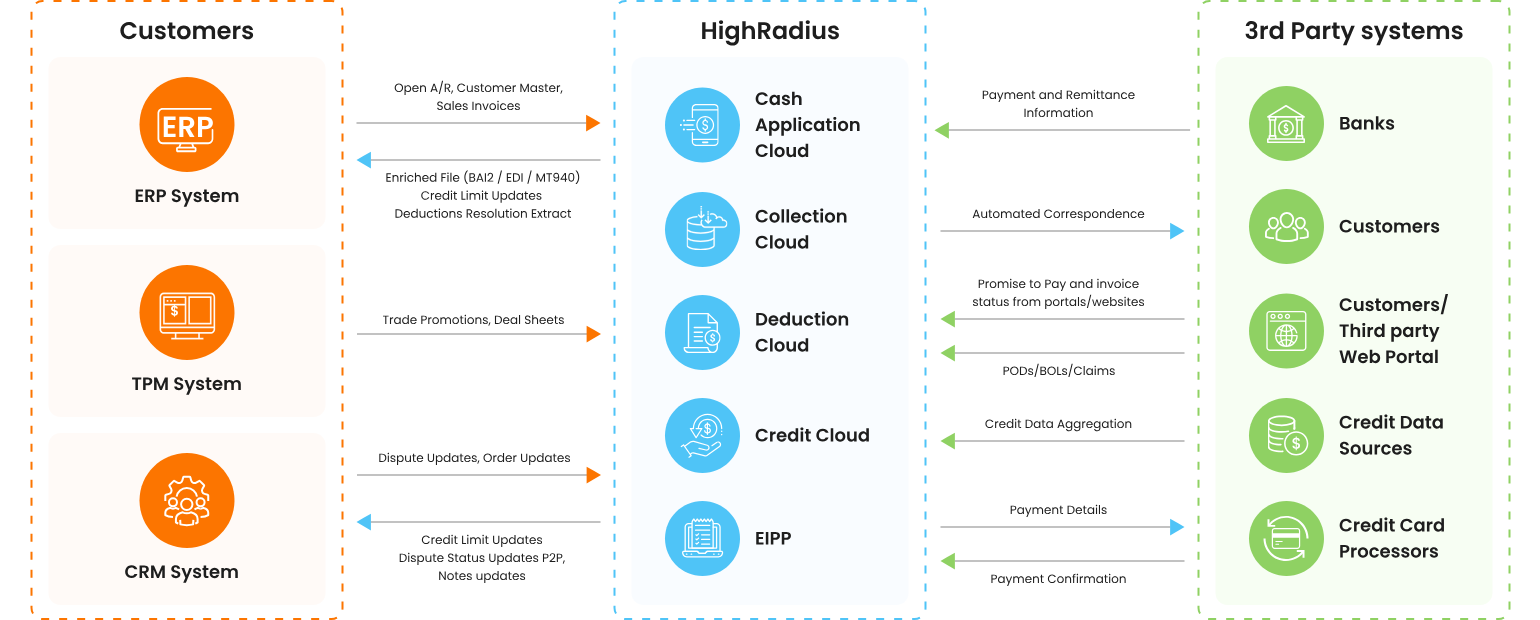
Download the ReportThe software connects to ERPs (SAP, Oracle, NetSuite), bank feeds, and payment gateways to pull raw data in real time, eliminating manual uploads.
Before matching begins, the system cleans and normalizes disparate data formats into a unified structure, ensuring consistency across all data sources.
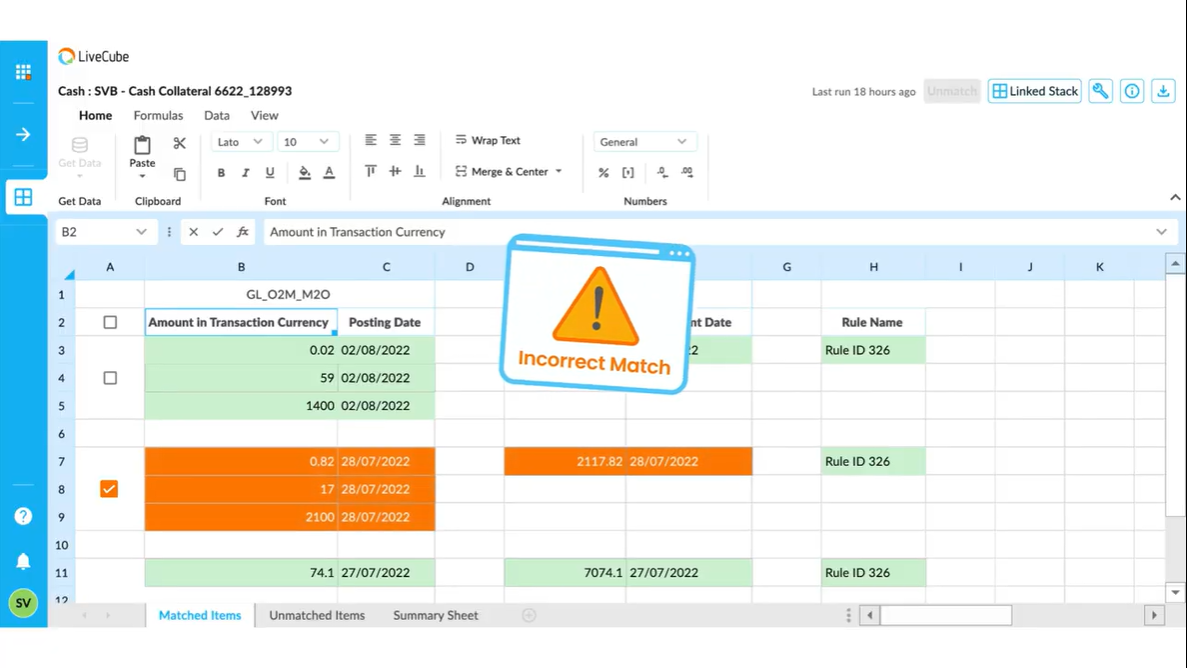
AI agents apply exact, fuzzy, and many-to-many matching rules to auto-clear up to 90% of the volume, streamlining reconciliation.
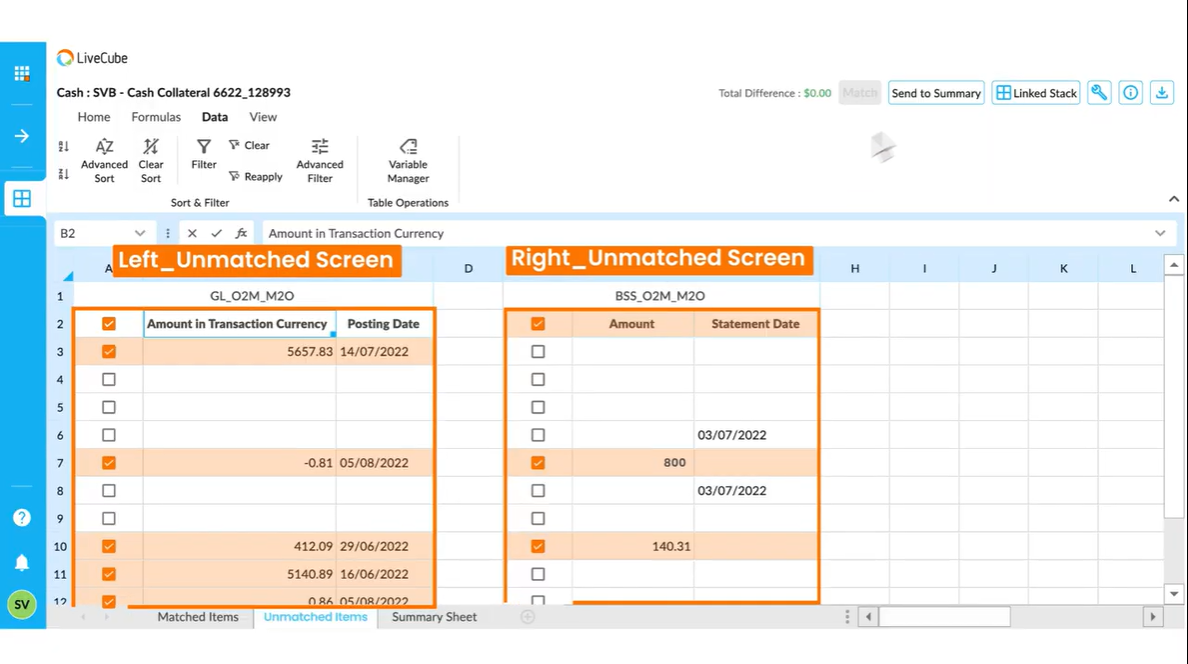
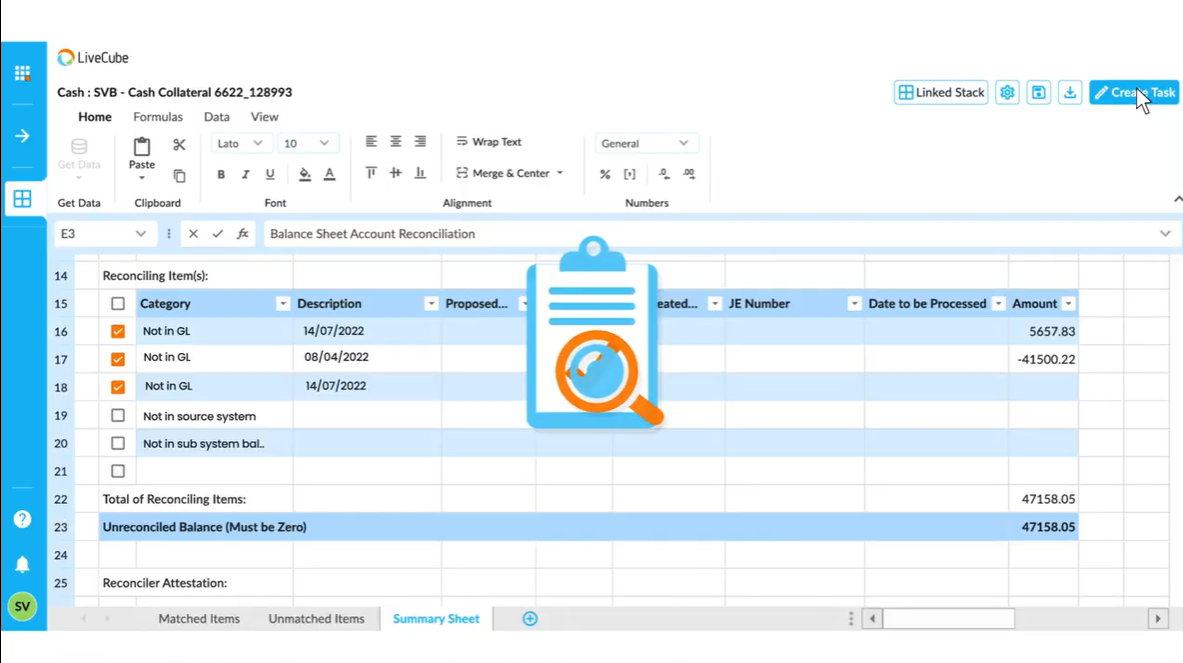
The system isolates unmatched items, flags anomalies, and suggests corrective journal entries for human review, ensuring seamless transaction matching and error detection.
Learn how automated transaction services can enhance the accuracy of your reconciliation process. Leveraging advanced AI algorithms and seamless ERP integration helps businesses reduce errors, streamline workflows, and improve transaction matching efficiency. Explore these resources to learn more about optimizing your financial operations.
Unlock how AI-powered algorithms streamline anomaly detection, reduce manual errors, and accelerate month‑end close with greater accuracy and audit readiness.
Download EbookDiscover how AI is revolutionizing finance from automating R2R and financial reporting to enhancing forecasting and strategic decision-making.
Download AI GuideExplore how automating high‑volume transaction matching accelerates reconciliation, boosts accuracy, and delivers significant ROI.
Download the EbookImproved reconciliation efficiency
AI-powered transaction matching automation software reduces days to reconcile by 30%, which in turn, reduces the days to close, improving close productivity by 70%.
Enhanced financial reporting accuracy
AI transaction matching greatly reduces manual intervention, which further helps eliminate human error for improved financial accuracy.
Improved adherence to accounting standards
Eliminating errors minimizes the chances of misstatements, which aids businesses in adhering to accounting standards and maintaining financial integrity.
Better exception handling
The software provides a centralized view of unmatched transactions, making it easier for businesses to resolve discrepancies, enhancing transaction matching and error detection.
HighRadius's automated transaction matching solution is ERP-agnostic, seamlessly integrating with any ERP system to ensure streamlined financial processes. Automated transaction services enable firms to match transactions efficiently and reduce manual errors across systems.
Traditional AI automates rules-based tasks, but with HighRadius AI agents, reconciliation becomes truly autonomous. It doesn’t just follow instructions — it analyzes, learns, and takes intelligent action. HighRadius has been recognized as a Challenger in the 2025 Gartner® Magic Quadrant™ for Financial Close and Consolidation Solutions, by delivering practical, results-driven AI for Record-to-Report (R2R) processes.
Value Creation, Not AI Hype: HighRadius LiveCube features over 200 pre-built agents, automating 60%+ of close tasks, including transaction matching. 15+ machine learning models power real-time anomaly detection, ensuring continuous close with guaranteed business outcomes, moving beyond AI hype. HighRadius aims to achieve 90% automation by 2027, as it evolves toward full autonomy.
The Difference Between Automated and Autonomous: Traditional automation follows rigid, rules-based instructions. Agentic AI analyzes data, learns patterns, and takes intelligent action. It continuously optimizes the process as new data or exceptions arise.
Probabilistic vs. Rigid Matching: Agentic AI uses probabilistic matching to link complex transactions, even when data is incomplete, ambiguous, or missing. When exceptions require human intervention, the AI learns from corrections and improves future matching accuracy.
AI agents continuously learn from each reconciliation cycle, adapting to new transaction patterns and reducing false exceptions over time.
Agentic AI powers reconciliation workflows to run on autopilot—automatically matching entries, clearing transactions, and resolving discrepancies without manual effort.
Reconciliation becomes touchless—data is ingested, exceptions are resolved via logic, and every action is traceable for transparency.
Leading enterprises worldwide are already using agentic AI to accelerate their financial close, reduce reconciliation errors, and maintain continuous audit readiness.
Transaction matching automation leverages advanced technologies, such as AI and ML, to compare and match high volumes of recorded transactions with external documents and data sources. This process plays a critical role in reconciling discrepancies and maintaining financial integrity.
Traditionally, transaction matching was conducted manually, which meant a time- and labor-intensive reconciliation that led to errors and a high chance of unreliable financial statements. Automating this process by leveraging transaction matching automation software makes reconciliation much more efficient. It minimizes the need for human intervention while significantly enhancing the reliability of financial reporting.
Now that we have discussed how automated transaction matching works, let’s understand how exactly it provides benefits over manual transaction matching:
| Criteria | Manual Transaction Matching | Automated Transaction Matching |
|---|---|---|
| Transaction matching process | The process is performed manually by reviewing all internal and external documents. | The process is performed automatically with the help of a software that matches internal records with external documents |
| Speed and accuracy | Manual transaction matching is time-consuming, labor-intensive, and prone to errors. | Automated transaction matching is fast and matches transactions in real-time for enhanced accuracy. |
| Scalability | Manual transaction matching has limited scalability and requires more resources as the number of transactions increases. | Automated transaction matching is highly scalable, and the software can handle a high volume of transactions easily. |
| Evolution | Anomaly detection and resolution | An automated transaction matching system automatically flags anomalies and suggests corrective actions for anomaly resolution. |
| Evolution | Manual transaction matching is highly dependent on accountants' skills, and the process cannot evolve beyond a certain point. | AI/ML-based transaction matching systems learn over time and adapt better to the needs of the business, requiring less and less manual intervention. |
| Financial reporting | Accountants have to manually create reconciliation reports. | Automated software generates reports that are customizable. |
If your business deals with high-volume transactions, frequent and complex reconciliations, and needs to adhere to accounting standards, then automated transaction matching software is the perfect solution for you. It’s time to move on from traditional reconciliation processes and leverage the power of AI-powered solutions.
Our transaction matching automation software offers best-in-class features to handle high-volume business transactions with ease.
Automatic transaction matching enables faster reconciliation by processing large volumes of transactions quickly. Businesses further get real-time insights as transaction matching automation allows for continuous data sync for updated records.
Leverage HighRadius’ AI/ML-powered transaction matching automation software alongside LiveCube, a no-code platform with an Excel-like interface capable of handling millions of records to automate account reconciliation. Say goodbye to manual data upload and data silos with automated data extraction from major ERPs and systems of records, ensuring enhanced efficiency and accuracy.
Automate reconciliations, eliminate exceptions faster, and deliver audit-ready financials with Agentic AI for accounting.
Book A Discovery Call
Transaction matching automation software allows businesses to automate the matching process of transactions with external documents. The software essentially enables users to automate the reconciliation process, which has traditionally been time-consuming, complex, and labor-intensive.
An automated transaction matching software is capable of matching two or more datasets in order to ensure that all the recorded transactions are accurate. Such software can help companies create accurate financial statements and is crucial for today’s finance and accounting teams.
Transaction matching exceptions are discrepancies that arise during the transaction matching process that requires further investigation and resolution. Transaction matching software leverages algorithms that flags such exceptions by matching recorded transactions with external documents.
When transactions remain unmatched based on the algorithm, they are flagged and require further manual investigation for resolution. This process allows companies to add a layer of security and manually check any unmatched transactions to resolve exceptions.
Advanced order and transaction matching uses multiple AI-driven functions to handle simple to complex reconciliation scenarios:
These functions optimize transaction matching across large volumes and diverse data sources, reducing manual effort and accelerating reconciliation.
HighRadius offers a range of tools that help automate reconciliation and receipt matching for financial operations.
All these tools are part of HighRadius’s automated transaction services. They work together to simplify matching and reconciliation, reduce manual tasks, improve accuracy, and speed up financial closing.